


The realm of cosmetic enhancements has been revolutionised with treatments that are not only less invasive but also incredibly effective. One such method that has seen a surge in popularity is dermal fillers. From the bustling streets of dermal fillers London clinics to the most esteemed global beauty hubs, this treatment is the talk of the town. Gone are the days when surgical interventions were the primary route for those seeking to enhance their facial aesthetics. Today, a more subtle, yet transformative approach is on the rise. In this article, we’ll dive into the specifics of this game-changing procedure.
Dermal fillers: Why the Hype?
Dermal fillers are injectable substances used to restore or enhance facial volume and contours. They offer an excellent non-invasive solution for those looking to turn back the clock, refine facial features, or simply bring out the best in their natural beauty. But what exactly goes into these treatments, and what makes them so effective?
Types of dermal filler:
At the heart of the dermal filler treatment is its composition. The types of dermal filler vary, but some common components include:
- Hyaluronic Acid (HA): A natural substance found in our skin, HA retains moisture, keeping the skin hydrated and volumized. When used as a filler, it provides a soft and natural feel. This is the most commonly used type currently.
- Calcium Hydroxylapatite: A naturally occurring substance in our bones, it offers a slightly thicker consistency, making it perfect for deeper lines and folds.
- Poly-L-lactic Acid: A biocompatible, biodegradable synthetic substance that helps the skin produce more collagen over time.
Each of these components plays a unique role, catering to different needs and yielding various results. The choice of filler often depends on the treatment area, the desired result, and the expertise of the practitioner.

Benefits of Dermal Fillers
The rising popularity of dermal fillers can be attributed to their array of benefits:
- Immediate Results: Unlike some treatments that require downtime or a waiting period to see results, dermal fillers offer almost instantaneous enhancement.
- Non-Invasive: No need for surgical procedures, meaning reduced risk and minimal downtime.
- Versatility: They can be used to address a variety of concerns, from fine lines to volume loss and recontouring facial features.
- Natural-Looking: When administered by an expert, the results look and feel natural, avoiding the ‘overdone’ look.
Dermal Fillers and Their Facial Applications
With a clear understanding of what dermal fillers are and their associated benefits, it’s paramount to spotlight the diverse facial areas they can rejuvenate:
- Natural Lip Fillers: Lips seeking additional volume or enhanced definition can greatly benefit from lip fillers, allowing for a customised approach to attain those lush, well-defined lips. Furthermore, lips can also suffer from the same general reduction in collagen that we notice after 25-27 years of age. Hence, they can deflate and look more dehydrated. Lip filler can plump and hydrate these lips without necessarily adding extra volume.
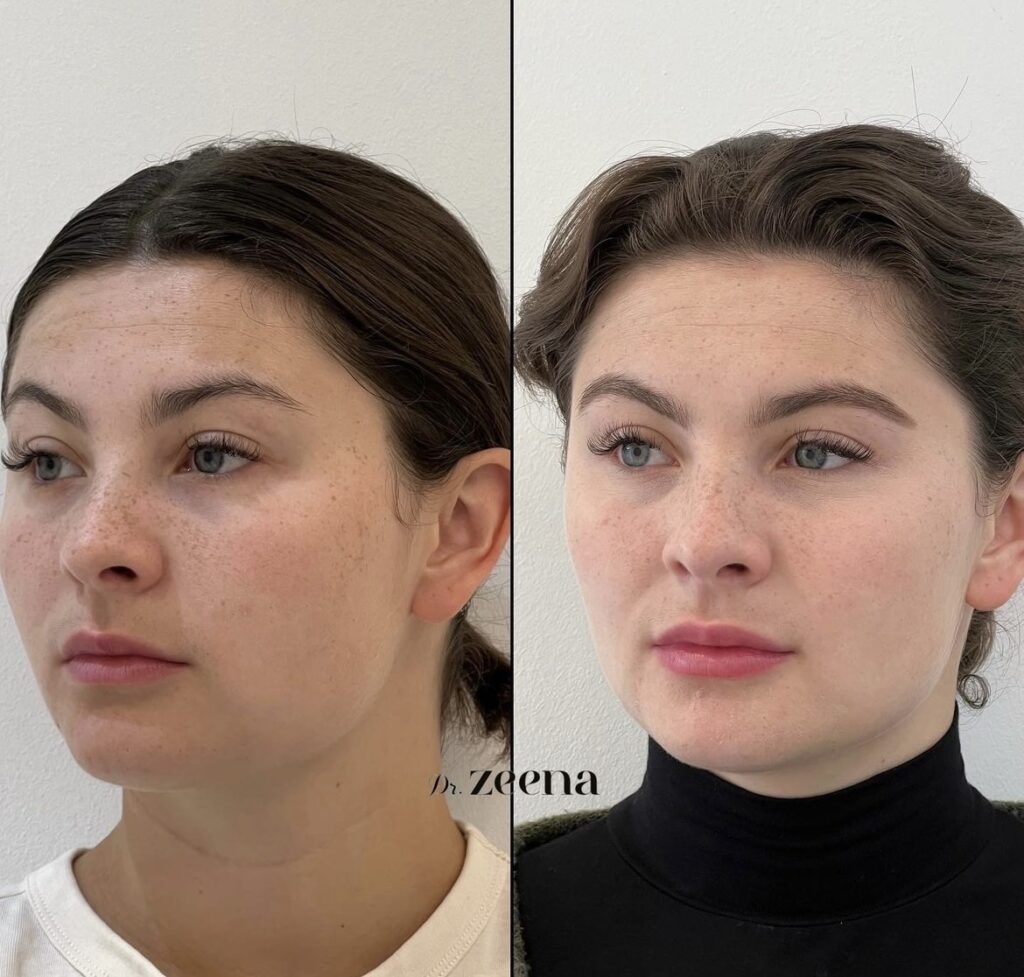
- Cheek Fillers: Ageing often leads to a loss of youthful plumpness in our cheeks. Cheek fillers can reinstate this lost volume, subtly lifting and contouring the face. Cheeks are situated in the middle face, losing support in this area can affect not only the upper face (under eyes area) but also the lower face causing nasolabial folds and jowls. Read along to understand this further.
- Dermal Filler for Nasolabial: The nasolabial folds, commonly known as laugh lines or smile lines, tend to deepen with age as the midface loses its support and starts to affect the lower part of the face causing these folds to be more prominent. Fillers can help smoothen these lines, ensuring a youthful transition from the nose to the mouth.

This case is a great example of loss of support in the midface, affecting both the under eye and nasolabial fold areas. Dermal filler in the under eyes area, midface (cheeks) and nasolabial folds used to treat this lovely patient.
- Marionette Lines Filler: These lines that run from the corners of the mouth down towards the chin can make one appear older or more serious than they feel. These can also be affected by loss of support from the midface/cheeks area. Fillers can soften these lines, restoring a more cheerful and youthful appearance.
- Jawline Fillers: A sharp jawline is synonymous with youth and vitality. As we age, the jaw may lose its definition as we have any sagginess from the upper and midface affecting this area and adding weight to it, causing the dreaded jowl look. Jawline fillers can redefine this area, offering a more sculpted and youthful contour.
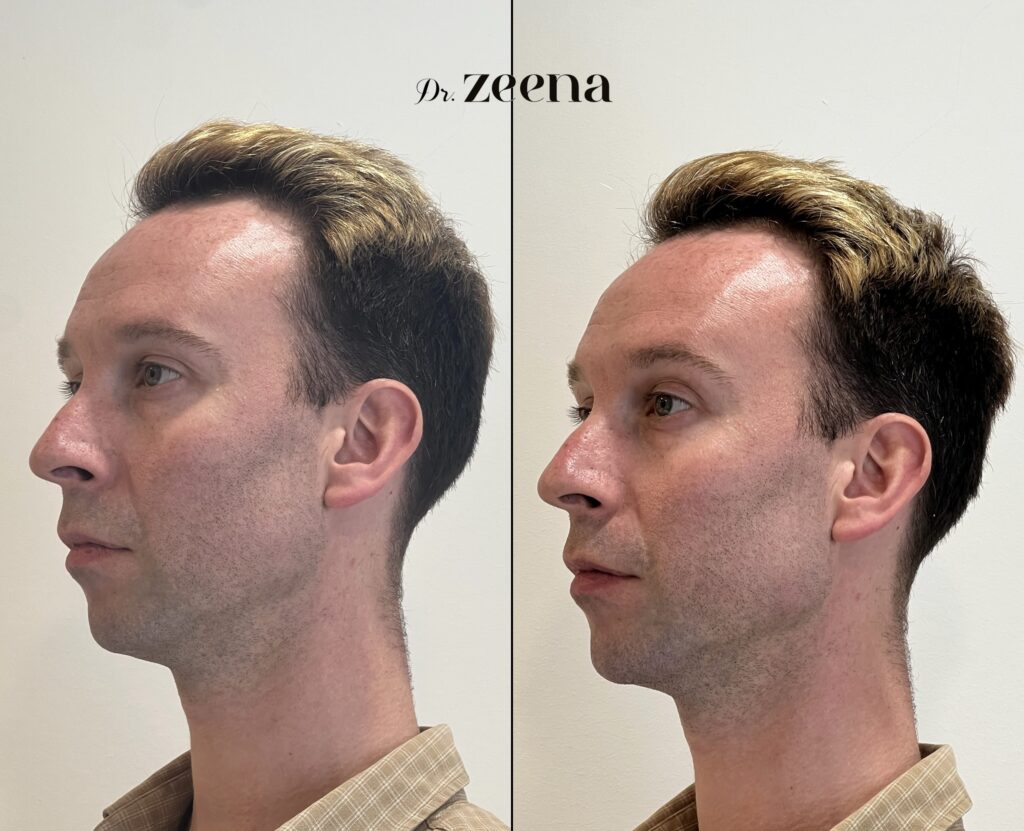
In this case jawline filler applied to give more definition and masculinization to this patient.
- Dermal Fillers for Under Eyes Area: The under-eye region, often referred to as the tear trough, is susceptible to hollowing as we age, as it loses support from the cheeks, which can give rise to a perpetually fatigued appearance. Dermal fillers can counteract this, restoring volume and instantly brightening the face.

Under eyes filler
- Chin Fillers: A defined chin contributes significantly to a balanced facial profile. Chin fillers can add definition, correct asymmetry, or even elongate a shorter chin, thus enhancing one’s overall look.

Chin filler
- Nose Fillers: Non-surgical rhinoplasty using nose fillers can rectify minor imperfections, lift the bridge, or correct asymmetry, offering a refined appearance without the downtime of surgery.
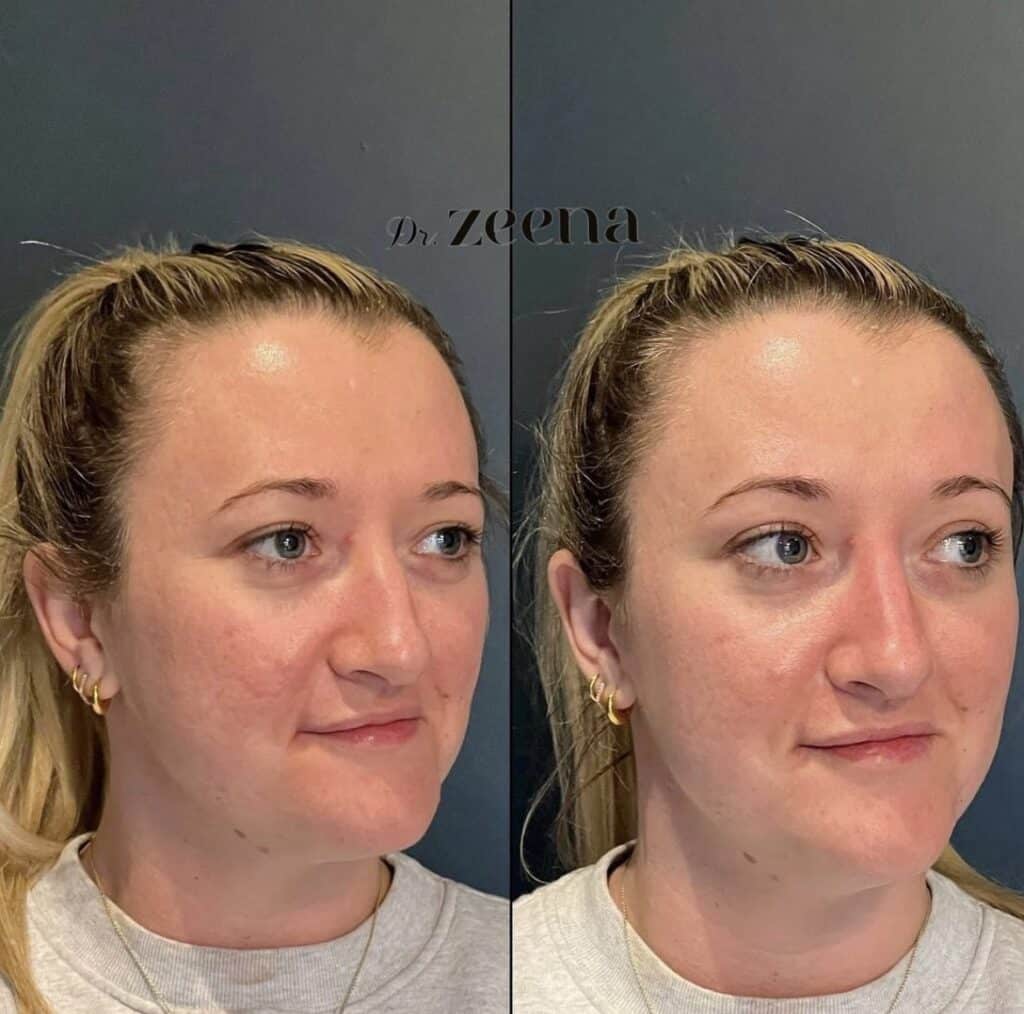
Nose filler
- Temple Fillers: The temples are an often-overlooked area that can hollow out with age. Filling in the temples can lead to a more youthful and balanced facial appearance.
The Lifespan and Long-Term Implications of Dermal Fillers
In today’s beauty-conscious world, dermal fillers have emerged as a beacon of hope for those wishing to rejuvenate their appearance without undergoing invasive procedures. As their popularity surges, so does the curiosity surrounding them. Questions like how long do dermal fillers last and concerns about potential risks of dermal fillers and their long term effects abound.
Understanding the Lifespan: How Long Do Dermal Fillers Last?
The longevity of dermal fillers can be likened to the lifespan of beauty products: it varies based on several factors. However, unlike your favourite lipstick or moisturiser, the duration of fillers hinges more on biology than on usage. Anywhere from 6 months to 2 years is a general range affected by the following factors:
- Type of Filler: The makeup of the filler plays a critical role in its longevity. Hyaluronic acid fillers, like Juvederm and Restylane, are absorbed by the body over time, typically lasting 6 to 18 months. In contrast, Poly-L-lactic acid fillers, like Sculptra, stimulate collagen production and may offer results lasting up to two years.
- Area of Application: Fillers used in areas of frequent movement, such as the lips, may dissipate faster than those in less dynamic regions, like the cheeks.
- Metabolic Rate: Believe it or not, your body’s metabolism affects how long your fillers last. Individuals with faster metabolic rates might break down the filler more quickly than others.
Navigating the Risks of Dermal Fillers
No cosmetic procedure is without its set of concerns. While dermal fillers are generally considered safe, especially when administered by experienced professionals, potential side effects exist:
- Immediate Side Effects: Common side effects post-injection include redness, swelling, pain, or bruising at the injection site. These are typically transient and resolve within a week.
- Allergic Reactions: Rare but possible, some individuals may react to the filler substance, causing redness, itching, or small bumps.
- Infection: Like any procedure that breaches the skin, there’s a small risk of infection. It’s crucial to ensure that the procedure is done under sterile conditions.
- Vascular Complications: In rare scenarios, the filler could inadvertently be injected into a blood vessel, leading to complications. This is rare and can be prevented by the knowledge and experience of your injector.
Conclusion
Dermal fillers, when administered with expertise and care, can be a fantastic tool in the beauty arsenal. They offer a non-invasive way to rejuvenate the face, often with immediate and satisfying results. However, like any treatment, they come with their set of considerations. The key is to be informed. By understanding their lifespan, potential risks, and long-term implications, one can make a decision rooted in knowledge and confidence. Remember, always consult with a reputable practitioner, ensuring that your journey with dermal fillers is both safe and fulfilling.