
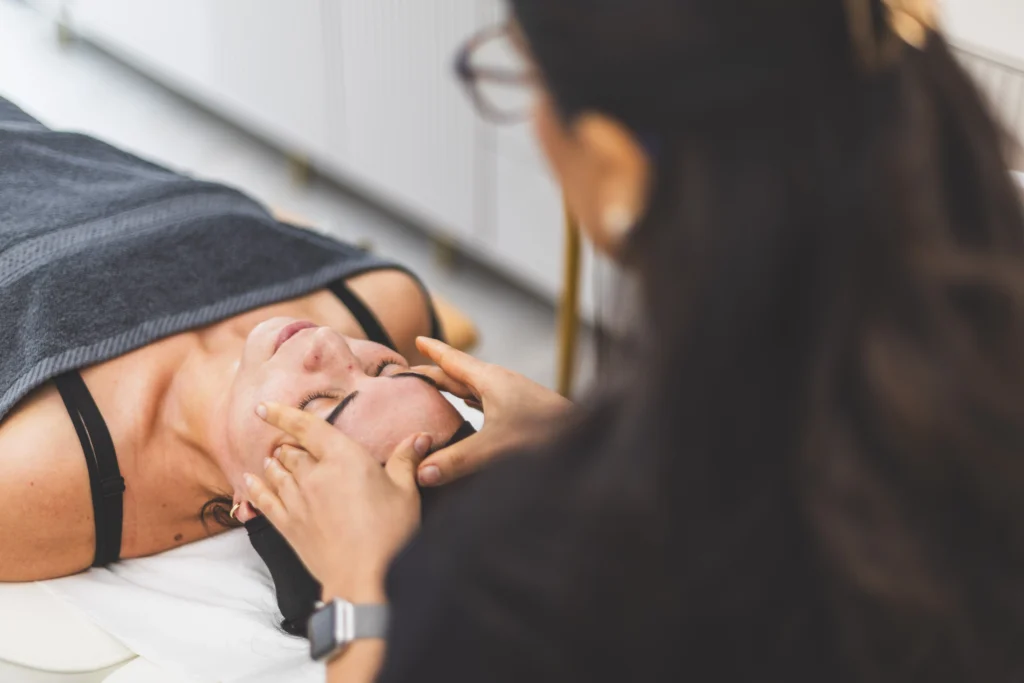
Skin Therapy is not simply about achieving a temporary glow. The right approach should help improve the health, function and appearance of your skin by understanding what it genuinely needs.
We often talk about wanting “better skin”.
But what does that actually mean?
For one person, it might mean fewer breakouts and less congestion. For another, it could mean softer pigmentation, improved hydration or a smoother texture. And for someone else, it may simply mean looking in the mirror and seeing skin that appears fresher, brighter and healthier.
The difficulty is that skin rarely has just one need.
It changes with age, hormones, stress, lifestyle, the seasons and even the products we use at home. That is why effective Skin Therapy should begin with understanding the skin rather than simply choosing the latest treatment.
At Dr Zeena Clinic, Skin Therapy takes a considered, personalised approach to improving the health and quality of your skin.
The philosophy is simple:
Restore. Renew. Reveal Healthy Skin.
Not a temporary filter. Not an overnight transformation.
Healthier skin that looks and feels like your own.
What Is Skin Therapy?
Skin Therapy is a personalised approach combining medical-grade, scientifically backed skin treatments to improve the condition, function and appearance of the skin.
Rather than treating everyone with the same protocol, treatment is selected according to your individual skin concerns and goals.
These may include:
- Uneven skin texture
- Dull or tired-looking skin
- Pigmentation
- Congestion
- Dehydration
- Early signs of ageing
- Loss of radiance
- General deterioration in skin quality
The aim is not simply to make your skin look good immediately after an appointment.
It is to encourage healthier skin renewal and progressively improve its texture, tone, hydration and overall quality.
Your Skin Is an Organ, Not an Accessory
This is an important distinction.
We are surrounded by skincare trends promising glass skin, poreless skin, instant resurfacing and dramatic transformations.
But skin is living tissue.
It has a barrier. It produces oil. It retains and loses moisture. It renews itself. It responds to inflammation, hormones, ultraviolet exposure, environmental stress and the products placed on it.
Treating it aggressively simply because a treatment is fashionable can sometimes do more harm than good.
At Dr Zeena Clinic, Skin Therapy begins with a different question:
What does your skin actually need?
That question guides everything that follows.
Why Does Skin Change Over Time?
Skin is constantly renewing itself, but that process does not remain exactly the same throughout life.
As we age, natural changes can affect collagen, elasticity, hydration and cellular renewal. Years of sun exposure may become more visible as uneven pigmentation. Hormonal changes can influence oil production and breakouts, while environmental exposure and lifestyle factors can affect the skin barrier and overall complexion.
You might start noticing that:
Your skin does not look as bright as it once did.
Make-up no longer sits quite as smoothly.
Certain areas feel dry whilst others remain congested.
Pigmentation appears more noticeable.
Fine lines become more visible.
Or your complexion simply looks tired despite a perfectly good night’s sleep.
None of this means your skin is “bad”.
It means its needs have changed.
Good Skin Therapy recognises those changes and responds appropriately.
Beyond the Glow: What Are We Actually Trying to Improve?
“Glowing skin” sounds appealing, but it is not a particularly useful clinical objective on its own.
The better question is: what needs to improve for your skin to look healthier?
For some patients, it is hydration.
For others, it is texture.
For others, the priority might be pigmentation, congestion or supporting the skin as it begins to show signs of ageing.
Skin Therapy can therefore focus on several interconnected aspects of skin health.
Improving Skin Texture
Healthy skin reflects light more evenly, which contributes to the smooth, fresh appearance we often associate with good skin.
When dead skin cells accumulate or skin renewal becomes less efficient, the surface can begin to appear rough, uneven or dull.
Appropriate skin treatments can support renewal and help create a smoother, more refined texture over time.
Restoring Radiance
Radiance is not about making the skin shiny.
Healthy radiance comes from a combination of good hydration, smoother texture, balanced pigmentation and effective skin renewal.
When these elements improve, the complexion can naturally appear brighter and fresher.
Supporting Hydration
Dehydrated skin can feel tight, look dull and make fine lines appear more noticeable.
But adding more moisturiser is not always the complete answer.
Effective skin therapy considers the condition of the skin barrier and its ability to maintain appropriate hydration, rather than simply treating dryness at surface level.
Addressing Pigmentation
Uneven pigmentation can develop for many reasons, including sun exposure, inflammation and hormonal influences.
Because not all pigmentation behaves in the same way, assessment matters.
The objective is not to aggressively remove every mark, but to understand the nature of the pigmentation and develop an appropriate strategy for creating a more balanced, even-looking complexion.
Managing Congestion
Blackheads, blocked pores, excess oil and recurring blemishes can all contribute to congested-looking skin.
It can be tempting to respond by scrubbing, exfoliating or stripping the skin more aggressively.
That is not always helpful.
Over-treatment can compromise the skin barrier and sometimes make an already unhappy complexion even more reactive.
A considered treatment plan aims to improve clarity whilst respecting the health of the skin.
Supporting Ageing Skin
Ageing skin does not need to be “fixed”.
But it can be supported.
Treatments designed to improve hydration, texture, renewal and overall skin quality can help ageing skin look fresher and healthier without trying to make it look artificially young.
That distinction fits closely with Dr Zeena’s wider philosophy:
Enhance, never change.
Why One Treatment Does Not Suit Everyone
Imagine two patients both saying:
“My skin looks dull.”
The first may have dehydrated skin with a compromised barrier.
The second may have accumulated surface cells, pigmentation and sun damage.
Their complaint sounds identical.
Their skin is not.
Giving both patients exactly the same treatment simply because they used the word “dull” misses the point.
This is why Dr Zeena takes the time to understand your skin, concerns, lifestyle and goals before recommending treatment.
The treatment should fit the patient.
The patient should never have to fit the treatment.
What Can Skin Therapy Help With?
A personalised Skin Therapy programme may be appropriate if you are concerned about:
Dullness
Helping tired-looking skin appear fresher and more luminous.
Uneven texture
Supporting smoother, more refined-looking skin.
Dehydration
Improving moisture balance and overall skin quality.
Pigmentation
Helping create a clearer and more even-looking complexion where clinically appropriate.
Congestion
Supporting clearer skin where blocked pores and excess build-up are contributing to the problem.
Signs of ageing
Improving the appearance and quality of skin as natural ageing changes become more noticeable.
The important point is that these concerns often overlap.
Rather than viewing them in isolation, Skin Therapy considers the complexion as a whole.
The Difference Between Skin Therapy and a Facial
Both can have a place in a skincare routine, but their objectives can be different.
A traditional facial is often focused on the immediate experience and appearance of the skin. You may leave feeling relaxed, hydrated and refreshed.
Skin Therapy takes a more treatment-led approach.
It asks what is happening within and on the surface of the skin, what concerns need to be addressed and what strategy is most appropriate for improving skin quality over time.
In other words:
A facial may focus on how your skin looks today.
Skin Therapy considers how we can improve its health and quality for the months ahead.
Good Skin Treatment Should Be a Strategy, Not a Collection of Appointments
One of the easiest mistakes to make with aesthetic skincare is jumping from one treatment to another.
A peel this month.
A trending treatment next month.
A completely different product routine after watching something online.
Then another treatment because somebody recommended it on social media.
More treatment does not automatically mean better skin.
Consistency and appropriate treatment usually matter far more.
Dr Zeena’s approach is to build a plan around what your skin needs rather than accumulating treatments simply because they are available.
That may involve improving hydration first.
It may mean supporting the skin barrier before introducing more active treatment.
It may involve a course of treatments followed by maintenance.
And sometimes it means doing less.
What Does Skin Therapy Feel Like?
The experience will depend on the specific treatment or combination of treatments recommended for your skin.
As a general guide:
Discomfort Level
Mild
Some treatments may produce temporary tingling, warmth or sensitivity, but comfort and skin safety remain priorities throughout treatment.
Downtime
Approximately 0–2 days
Depending on the treatment performed, you may experience temporary redness, sensitivity or mild changes to the skin.
Your individual treatment plan and expected recovery will be discussed with you beforehand.
When Will I See Results?
Skin health develops gradually.
While some patients may notice earlier improvements in hydration or radiance, more meaningful changes in skin quality can take time.
Results may progressively develop over approximately 4–12 weeks, depending on your starting point, concerns and treatment plan.
This is important because healthy skin is rarely created overnight.
It is built.
How Long Can Results Last?
Depending on the treatments performed, your skin, lifestyle and maintenance routine, improvements may be maintained for approximately 6–12 months.
However, skin continues to age and respond to lifestyle and environmental factors.
Think of Skin Therapy less as completing a treatment and more as establishing better long-term skin management.
What About Your Skincare at Home?
Clinic treatments are only part of the picture.
What you do during the hundreds of days each year when you are not sitting in a treatment room matters enormously.
An effective home routine does not necessarily require ten products.
In fact, complicated routines can sometimes create more problems than they solve.
The right approach depends on your skin, but the fundamentals may include appropriate cleansing, hydration, targeted active ingredients where suitable and consistent sun protection.
The objective is not to own more skincare.
It is to use the right skincare consistently.
Professional treatments and home skincare should work together rather than compete with one another.
When Should You Consider Skin Therapy?
You do not need to wait until there is a major skin concern.
You may consider a consultation if:
- Your complexion has become dull or uneven
- Your skin regularly feels dehydrated
- You are noticing changes in texture
- Pigmentation is becoming more visible
- Your skin feels congested
- You are beginning to notice age-related changes
- Your existing skincare routine no longer seems effective
- You are confused by conflicting skincare advice
- You simply want to improve your long-term skin health
Sometimes the most valuable part of a consultation is simply understanding what your skin needs and, equally, what it does not need.
Skin Therapy Before an Event: Start Earlier Than You Think
There is one situation where planning becomes particularly important.
Perhaps you have a wedding coming up.
A milestone birthday.
An important celebration.
Or simply an occasion where you want your skin looking its healthiest.
It is tempting to book an intensive treatment a few days beforehand.
That is not always the best strategy.
If improving texture, pigmentation, hydration or overall skin quality is the goal, giving the skin sufficient time to respond usually makes far more sense.
Starting several weeks or months ahead allows treatment to be planned progressively rather than trying to force an instant result.
Healthy skin photographs beautifully.
But more importantly, it still looks like skin.
Frequently Asked Questions
How many Skin Therapy treatments will I need?
There is no standard number because treatment depends on your skin condition, concerns and goals. Some patients may benefit from a course of treatment, while others may require occasional maintenance. Dr Zeena will recommend an appropriate plan following assessment.
Is Skin Therapy suitable for sensitive skin?
Potentially, but sensitive or reactive skin requires careful assessment. The treatment selected, its intensity and your home skincare may need to be adjusted according to your individual skin.
Can Skin Therapy help pigmentation?
Certain skin treatments can help improve the appearance of pigmentation, but the cause and type of pigmentation need to be considered first. Not every form of pigmentation should be approached in exactly the same way.
Will my skin peel afterwards?
Not necessarily. This depends entirely on the treatment performed. Some treatments may result in temporary redness, dryness or light shedding, whilst others have very little visible downtime.
How quickly will I see a difference?
Some improvements may be noticed relatively quickly, particularly in hydration and radiance. More significant changes in texture, tone and overall skin quality may develop progressively over approximately 4–12 weeks.
Can I combine Skin Therapy with other aesthetic treatments?
In many cases, different treatments can form part of a wider aesthetic plan, but timing and suitability matter. Dr Zeena can advise on the appropriate sequence based on your skin and any other treatments you are considering.
Do I still need a skincare routine after treatment?
Yes. Professional treatment and an appropriate home routine complement one another. Consistent skincare and sun protection can play an important role in maintaining your results and supporting long-term skin health.
Your Skin Consultation with Dr Zeena
Perhaps the most valuable thing you can give your skin is not another product.
It is clarity.
Clarity about what is causing your concerns.
Clarity about which treatments may genuinely help.
Clarity about what you should be doing at home.
And clarity about which treatments or products you simply do not need.
Dr Zeena’s approach is calm, considered and individual.
Her background in clinical practice and detailed understanding of facial anatomy underpin a philosophy that prioritises safety, balance and long-term outcomes rather than trends or over-treatment.
Your treatment plan begins with your skin as it is today, not an idealised version of how somebody tells you it should look.
Healthier Skin Starts With the Right Skin Therapy
There will always be another skincare trend.
Another ingredient.
Another treatment.
Another promise of perfect skin.
But perfection is not the objective.
Healthy skin has texture. It moves. It changes. It ages.
The purpose of good Skin Therapy is not to remove everything that makes your skin human. It is to help your skin function and look at its healthiest.
To restore what has been depleted.
To support renewal.
And to reveal the healthier, fresher complexion underneath.
At Dr Zeena Clinic, Skin Therapy means thoughtful treatment, realistic expectations and a personalised plan designed around your skin.
Restore. Renew. Reveal Healthy Skin.
If your skin feels dull, dehydrated, congested or simply not quite like itself, book a Skin Therapy consultation with Dr Zeena to understand what your skin needs and create a personalised approach to improving its long-term health and appearance.